Partial Collateralization: The Overlooked Advantage

Why sweep the entire balance when you only need a fraction?

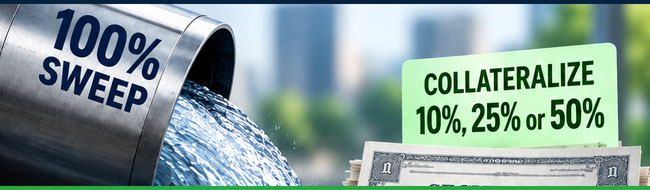
Reciprocal deposit sweeps can help protect uninsured public funds, but they are not always the most economical option. In states that permit partial collateralization, qualifying banks may be able to pledge eligible securities equal to just 10%, 25%, or 50% of the uninsured deposit balance, subject to applicable requirements. That difference can create a meaningful opportunity to reduce costs while retaining public deposits directly with your bank.

  • Use collateral you already own
  • Keep community deposits local
  • Support federal and state compliance
  • Collateralize only what your state requires
  • Calculate FDIC coverage and optimize collateral automatically

Cut management time by

50%

Reduce Collateral usage by

38%

Stratman Solutions’ whitepaper, Partial Collateralization: The Overlooked Advantage, explores when securities collateralization may offer a financial and strategic advantage over reciprocal deposit sweeps—and why a combination of both approaches may deliver the best result.* *Stratman Solutions’ whitepaper, Partial Collateralization: The Overlooked Advantage, explores when securities collateralization may offer a financial and strategic advantage over reciprocal deposit sweeps—and why a combination of both approaches may deliver the best result.

collateralize 15%, 25%, or 50%
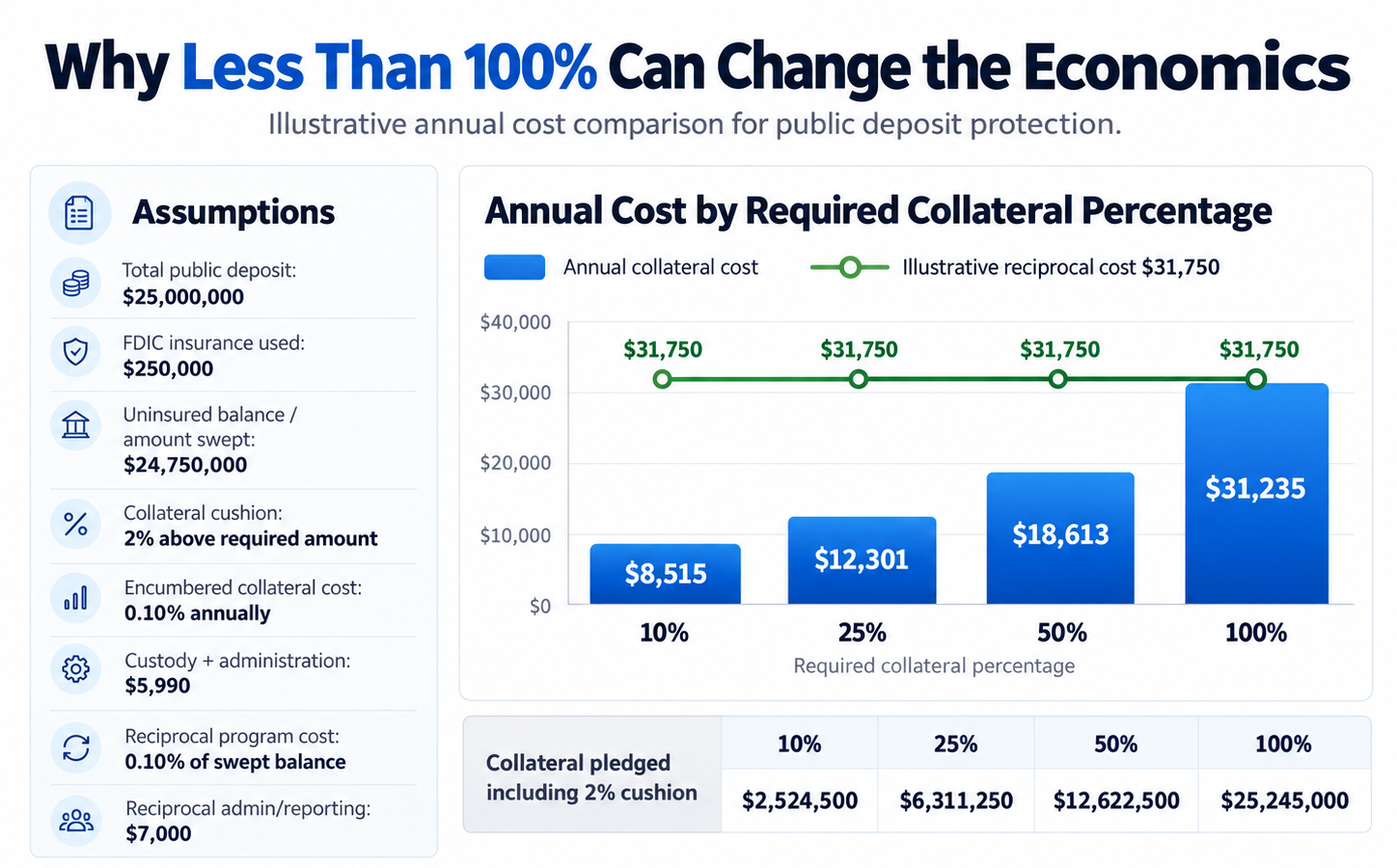
Infographic comparing annual public deposit protection costs at different collateral requirements. Annual costs increase from $8,515 at 10% collateral to $31,235 at 100% collateral, showing that lower collateral requirements can significantly reduce costs.
CECL Model Software

A Smaller Collateral Requirement Can Change the Economics

The comparison is not the dollar amount of pledged securities versus network fees. It is the cost of committing the required collateral, including custody, monitoring, and administration, versus the costs associated with sweeping the full uninsured balance. Generally, the bank continues earning income on securities it pledges. For banks with available eligible securities, direct collateralization can reduce network-related expenses, preserve greater control over deposit pricing, and strengthen relationships with your local municipalities and public entities.


Before sweeping public deposits through a network, explore what it could cost to secure them with collateral your bank already owns.

Read the full whitepaper for illustrative cost comparisons, state-program examples, and a closer look at a hybrid public deposit strategy.

About Stratman Solutions